Analysis Oil Price Spike Benefits Unhedged Producers
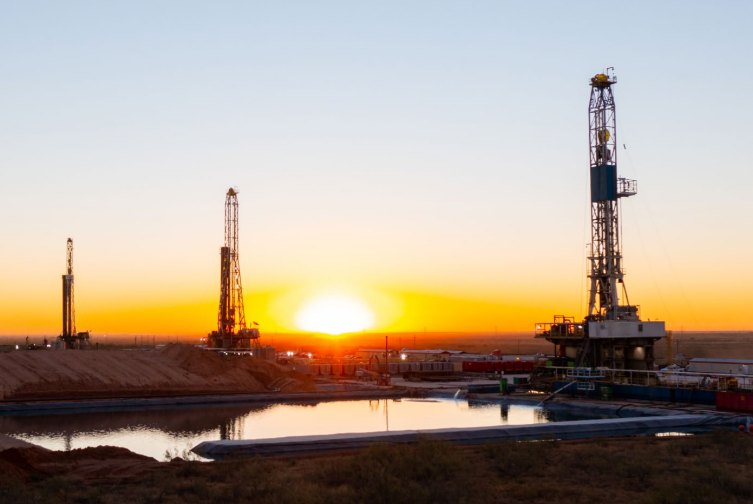
Several North American oil and gas producers are poised to benefit from the recent oil price spike, thanks to their hedging strategies.
Geologic data shows that, as of year-end 2025, Permian-focused Diamondback Energy was the largest oil producer in a group of 14 pure E&P companies in the U.S. and Canada that either had:
- No price-capping derivatives* in place for Q1 and Q2 2026; or,
- Hedging that represented up to only 10% of latest production.
Unlike their hedged peers, these 14 producers have no ceiling on their earnings and are expected to reap the largest benefits from the recent surge in oil prices caused by the conflict in Iran.
The various oil hedging strategies for Q1 and Q2 2026 for U.S. and Canadian E&P companies are shown in the charts below.
Source: Evaluate Energy
Hedges made in tough conditions
Aside from the group of 14 led by Diamondback, the rest of the market is likely to see earnings capped. U.S. and Canadian oil producers ended 2025 facing a challenging outlook, with 2026 oil price forecasts falling below $60/bbl.
While some producers, like Diamondback, chose not to hedge, weaker cash-flow expectations prompted many other management teams to act defensively. Fixed-price swaps and collars in the range of $55 to $65/bbl were locked in, safeguarding millions of barrels against further price declines to ensure stable cash flow.
However, the outbreak of the Iranian conflict has dramatically changed the market, with Brent and WTI surging past $100 per barrel for the first time since 2022.
Source: Evaluate Energy, LSEG
As a result, these same swaps and collars are now capping prices instead of safeguarding them and prevent hedged producers from fully capturing the upside of higher oil prices in Q1 and Q2.
Market reset coming?
First quarter results, due towards the end of April and early May, will show how far North America’s E&Ps have been able to adjust and hedge at higher prices.
Early signs of this have already surfaced.
Canada’s Kelt Exploration is one example. In its Q4 results, the company disclosed hedge-book revisions made after year-end 2025, including swaps of over $90/bbl during the period between April and June.
We expect many other producers to follow suit sooner rather than later. Companies in Diamondback’s group of 14 with little to no oil hedging in early 2026 may also decide to lock in volumes now that prices are significantly higher.
If oil prices remain high, we’ll be looking beyond hedging. We’ll track changes in capital spending budgets, debt management strategies and any short-term boosts in shareholder returns, including special dividends or share buybacks.
*Fixed swaps, collars, three-way collars or calls